
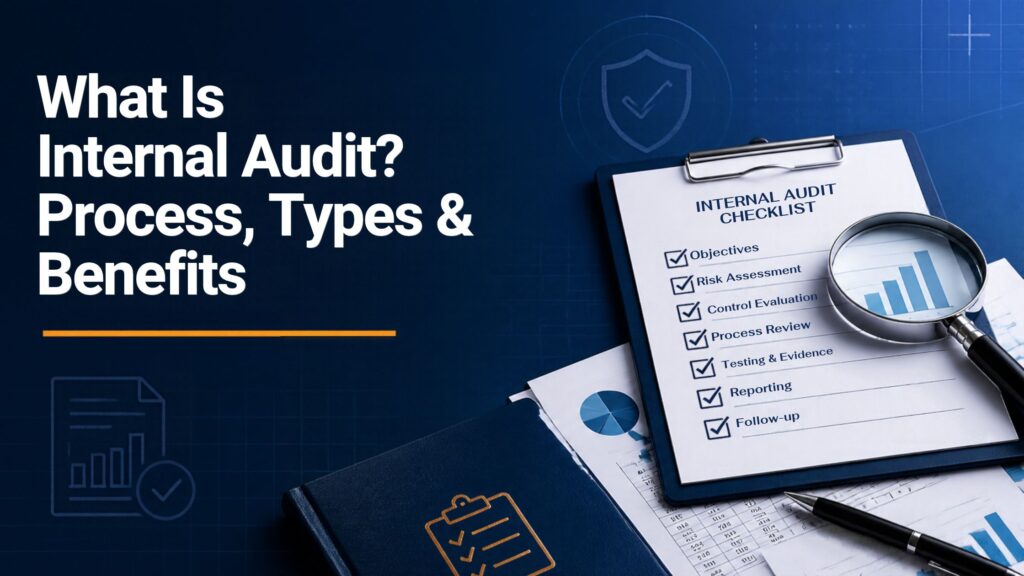
Internal audit is an essential business function that enables organisations to assess their controls, manage risks, strengthen governance and enhance operational performance. Although internal audit is compulsory for certain categories of companies in India, its importance goes well beyond meeting regulatory requirements. It provides an independent and systematic approach to identifying process weaknesses, improving accountability and supporting informed decision-making throughout the organisation.
As the business environment becomes more complex, organisations must maintain stronger oversight, effective internal controls and the ability to respond to emerging risks. This makes internal audit an important part of broader risk management and control frameworks. Businesses seeking to put these practices into action can benefit from professional internal audit services.
What Is an Internal Audit?
Internal audit is an independent and objective assurance function that examines whether an organisation’s internal systems, procedures and controls are working effectively. Its role goes beyond verifying regulatory compliance. It also helps businesses assess their risk management practices, safeguard assets, ensure reliable reporting and achieve their strategic and operational goals.
In practice, internal audit examines several areas beyond financial controls. These include operational procedures, compliance systems, technology infrastructure and corporate governance mechanisms. As businesses grow and change, internal audit also covers areas such as process efficiency, business continuity, cybersecurity and oversight of organisational transformation.
From this wider perspective, internal audit is a value-driven function that helps organisations establish stronger internal controls, maintain disciplined operations and improve the quality of management oversight.
Why Internal Audit Matters to Organisations
Internal audit plays an important role because businesses operate in an environment influenced by uncertainty, regulatory requirements, operational challenges and performance expectations. A properly structured internal audit function helps management detect weaknesses before they develop into major problems. It also provides better insight into whether internal policies are being implemented, risks are adequately managed and business processes are functioning as expected.
Therefore, internal audits are important not just for governance and regulatory compliance, but also for managing costs, maintaining operational discipline, reducing fraud risks and building long-term business resilience.
Types of Internal Audit
The scope of an internal audit depends on the nature of the organisation and the functions, systems and risk areas that need to be examined. Some of the most common types of internal audits are:
- Financial Audit: Examines accounting procedures, financial controls and the accuracy and reliability of financial reporting.
- Operational Audit: Reviews business activities across departments such as production, procurement, logistics, human resources and administration to identify inefficiencies and gaps in controls.
- Compliance Audit: Checks whether the organisation follows applicable laws, regulations, internal policies and established procedures.
- IT Audit: Evaluates information systems, user access controls, data accuracy, cybersecurity measures and technology governance.
- Performance Audit: Assesses whether business processes and management decisions are contributing to the organisation’s intended objectives and outcomes.
- Environmental or ESG Audit: Examines environmental, social and governance practices in line with changing stakeholder expectations and regulatory requirements.
- Special Audit: Conducts a targeted examination in response to a particular issue, incident, concern or management requirement.
- Fraud-Focused Review: Investigates transactions or control systems where there is an increased possibility of misreporting, misuse of resources or misconduct.
Internal Audit Process
The scope of an internal audit may differ from one organisation to another, but the process generally follows a systematic approach. It focuses on reviewing controls, examining exceptions, identifying underlying causes and recommending corrective measures. A typical internal audit process involves the following stages:
- Process Review: Examining systems, physical operations, records and control arrangements across the relevant business functions.
- Transaction Analysis: Reviewing reports and transaction movements to detect irregularities, exceptions and unusual trends.
- Detailed Transaction Review: Checking supporting documents and records relating to high-risk transactions or identified exceptions.
- Root Cause Analysis: Identifying the reasons behind control failures or process weaknesses and determining the corrective measures required.
- Reporting: Recording audit observations, their potential impact and recommendations for management review and further action.
The usual audit deliverables include observation records, issue summaries, root cause assessments and actionable recommendations for strengthening internal controls. A more detailed explanation is available in the guide to the internal audit process from A to Z.
Internal Audit Applicability in India
In India, the Companies Act, 2013 prescribes internal audit requirements for specific categories of companies. Internal audit is compulsory for all listed companies and certain unlisted public and private companies that meet the specified financial thresholds. These requirements highlight the role of internal audit in improving corporate governance, accountability and financial discipline.
Applicability for Unlisted Public Companies
- Paid-up share capital of Rs 50 crores or more during the preceding financial year
- Turnover of Rs 200 crores or more during the preceding financial year
- Outstanding loans and borrowings from banks and public financial institutions exceeding Rs 100 crores at any time during the preceding financial year
- Outstanding deposits of Rs 25 crores or more at any time during the preceding financial year
Applicability for Private Companies
- Turnover of Rs 200 crores or more during the preceding financial year
- Outstanding loans and borrowings from banks and public financial institutions exceeding Rs 100 crores at any time during the preceding financial year
Even when internal audit is not a statutory requirement, many organisations choose to implement it voluntarily because of the practical business benefits it offers. The applicability and relevance of internal audit in the current scenario provide further context on this subject.
Benefits of Internal Audit
Internal audit offers several benefits across corporate governance, regulatory compliance, financial management, business operations and overall performance. By independently assessing the effectiveness of business processes and internal controls, it enables organisations to address potential problems before they become more serious.
- Identifying Control Gaps: Internal audit identifies weaknesses in the design or implementation of controls that could expose an organisation to fraud, errors, asset losses or regulatory non-compliance.
- Strengthening Governance: It promotes transparency, accountability and effective oversight by examining whether responsibilities, approval procedures and reporting structures are working properly.
- Improving Compliance: It helps detect non-compliance with legal requirements, regulations and internal procedures, supporting greater accuracy and consistency in reporting and operations.
- Enhancing Operational Efficiency: Internal audit identifies inefficiencies in business processes and helps organisations improve productivity, minimise waste and maintain better process discipline.
- Strengthening Cost Control: It reviews expense management, financial controls and process-related leakages that may affect the organisation’s ability to manage costs.
- Improving Technology and Cybersecurity Oversight: It helps organisations identify vulnerabilities in IT systems, access management controls and compliance with security requirements.
Collectively, these benefits make internal audit a valuable function for organisations aiming to establish stronger internal controls, improve governance and achieve sustainable business performance.
FAQs
Q- What is an internal audit?
An internal audit is a systematic review of an organization’s processes, controls, risks, financial activities, and operations to identify weaknesses and improve overall performance.
Q- Why is internal audit important for a business?
Internal audit helps identify financial and operational risks, strengthen internal controls, improve compliance, and support better management decisions.
Q- What is the main purpose of an internal audit?
The main purpose is to independently evaluate whether internal controls, risk-management processes, governance practices, and business procedures are working effectively.
Q- What are the different types of internal audit?
Common types include financial audits, operational audits, compliance audits, IT audits, risk-based audits, forensic reviews, and process audits.
Q- What is the internal audit process?
The process generally involves planning, understanding risks and controls, testing transactions and processes, identifying findings, preparing an audit report, and following up on corrective actions.
Q- How does an internal auditor identify risks?
An auditor reviews business processes, financial records, internal controls, previous audit findings, regulatory requirements, and operational activities to identify areas with higher risk.
Q- What is a risk-based internal audit?
A risk-based audit focuses audit resources on areas that present the greatest potential financial, operational, compliance, or strategic risks to the organization.
Q- What is the difference between internal audit and statutory audit?
Internal audit focuses mainly on improving internal controls, risk management, governance, and operations, while a statutory audit is conducted to provide an independent opinion on financial statements as required by applicable law.
Q- Is internal audit mandatory for every company in India?
No. Internal audit is not mandatory for every company. Certain prescribed classes of companies are required to appoint an internal auditor under the Companies Act, while other businesses may adopt internal audits voluntarily.
Q- Who can conduct an internal audit?
An internal audit may be conducted by an internal audit team or an external professional or firm, depending on the organization’s requirements and applicable regulations.
Q- What areas are covered in an internal audit?
An internal audit can cover accounting, finance, procurement, inventory, payroll, sales, information technology, compliance, risk management, and other business processes.
Q- How often should internal audits be conducted?
The frequency depends on the size, complexity, risk profile, industry, and regulatory requirements of the organization. High-risk areas may require more frequent reviews.
Q- What are the benefits of internal audit for small businesses?
Internal audit can help small businesses detect errors, prevent fraud, improve financial controls, monitor expenses, strengthen processes, and reduce operational risks.
Q- Can internal audit detect fraud?
Internal audit can identify control weaknesses, unusual transactions, and indicators of potential fraud. However, it is not a guarantee that every instance of fraud will be detected.
Q- How does internal audit improve internal controls?
Auditors test existing controls, identify gaps or weaknesses, and recommend improvements to make processes more reliable, efficient, and resistant to errors or misuse.
Q- What is an internal audit report?
An internal audit report summarizes the scope and findings of the audit, identifies control or process weaknesses, assesses risks, and provides recommendations for corrective action.
Q- What is an internal audit checklist?
An internal audit checklist is a structured list of controls, documents, transactions, processes, and compliance areas that auditors review during an audit.
Q- How does internal audit support management?
Internal audit provides management with independent insights into business risks, control effectiveness, operational efficiency, and areas requiring improvement.
Q- Can internal audit help with regulatory compliance?
Yes. An internal audit can review whether applicable laws, regulations, internal policies, and prescribed procedures are being followed and highlight areas requiring corrective action.
Q- How can a CA help with internal audit services?
A CA can assist with risk assessment, internal control reviews, financial and compliance audits, process evaluation, audit reporting, and recommendations for strengthening business controls.